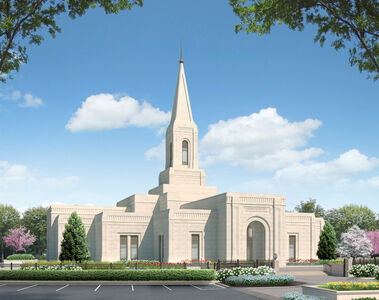
Phnom Penh Cambodia Temple

Miraflores Guatemala City Guatemala Temple
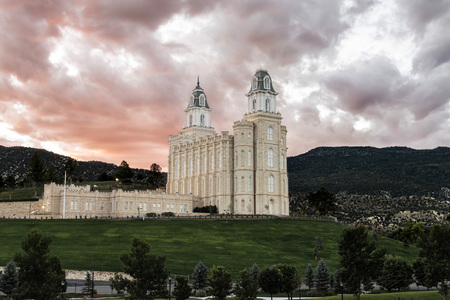
Ephraim Utah Temple
223rd dedicated temple in operation
© Intellectual Reserve, Inc. All rights reserved.
Services
NO visitors' center open to the publicNO arrival center available
NO patron housing available
NO distribution center on site (Store Locator)
Announcement:
1 May 2021Groundbreaking and Site Dedication:
27 August 2022 by Russell M. NelsonPublic Open House:
2–19 September 2026 | 17 daysDedication:
11 October 2026 by Ronald A. RasbandSite:
9.16 acres | 3.7 hectaresArchitectural Features:
Two attached end towersOrdinance Rooms:
Four instruction rooms, three sealing rooms, and one baptistryTotal Floor Area:
41,680 square feet | 3,872 square metersHeight:
156 feet 8 inches | 47.8 metersElevation:
5,567 feet | 1,697 metersTemple Locale
The Ephraim Utah Temple stands in the Sanpete Valley less than 10 miles north of the historic Manti Utah Temple. The area was settled in the mid-1800s largely by Scandinavian pioneers. Honoring that heritage and its agricultural legacy, the temple features wheat motifs, recalling the historic Ephraim Relief Society Granary, once known as the “granary of Utah,” while oxeye daisy and forget-me-not blossoms — flowers long cherished in Scandinavia — reflect the cultural roots of Ephraim’s early settlers. A color palette of golden yellows and varied shades of blue carries these motifs throughout the temple.
Temple Facts
The Ephraim Utah Temple was the twenty-seventh temple built in Utah and the second built in Sanpete County, following the Manti Utah Temple (1888).
Both the Ephraim Utah Temple and the Manti Utah Temple are located within the boundaries of Manti High School.
During his remarks at the groundbreaking ceremony for the Ephraim Utah Temple, President Russell M. Nelson remarked that shortly after the April 2021 general conference, he "received very clear instruction" from the Lord that the pioneer craftsmanship of the Manti Utah Temple, which had been scheduled for renovation, should be preserved and that a new temple should be built in Ephraim.
Temple History
Announcement
President Russell M. Nelson announced the construction of the Ephraim Utah Temple in a prerecorded message played at a press conference held inside the Manti Tabernacle on Saturday, May 1, 2021, in conjunction with an announcement that the murals in the Manti Utah Temple would be preserved as part of an upcoming renovation.1
Site
On October 22, 2021, the site for the Ephraim Utah Temple was announced as a 9.16-acre parcel located at the intersection of 200 North and 400 East in Ephraim. Plans called for a two-story temple of approximately 39,000 square feet with four 30-seat endowment rooms, three sealing rooms, and one baptismal font.2
Rendering
On March 4, 2022, the official exterior rendering was released for the Ephraim Utah Temple.
Groundbreaking
President Russell M. Nelson, whose family helped settle the Sanpete Valley in 1849, presided at the groundbreaking ceremony for the Ephraim Utah Temple on Saturday, August 27, 2022. Explaining his connection to the area, he said: "My dear mother was born in Ephraim, not far from this very temple site. My father was born in Manti. Three of my four grandparents were born here in Ephraim. All eight of my great-grandparents lived in Ephraim." In his site dedicatory prayer, he prayed, "We are deeply grateful for our ancestors. They have laid a foundation of faith that undergirds our spiritual strength. May we learn who they are, find their qualifying information, and bless their lives with sacred rites offered vicariously in this holy house."3
Open House and Dedication
The public toured the Ephraim Utah Temple during a public open house from Wednesday, September 2, through Saturday, September 19, 2026 (excluding Sundays). An event for the media was held on Monday, August 31, followed by one day of private tours for invited guests. Elder Ronald A. Rasband of the Quorum of the Twelve Apostles presided at the dedication on Sunday, October 11, at 10:00 a.m. The dedicatory session will be broadcast to all units in the temple district and rebroadcast at 2:00 p.m.4
Temple Design
Exterior
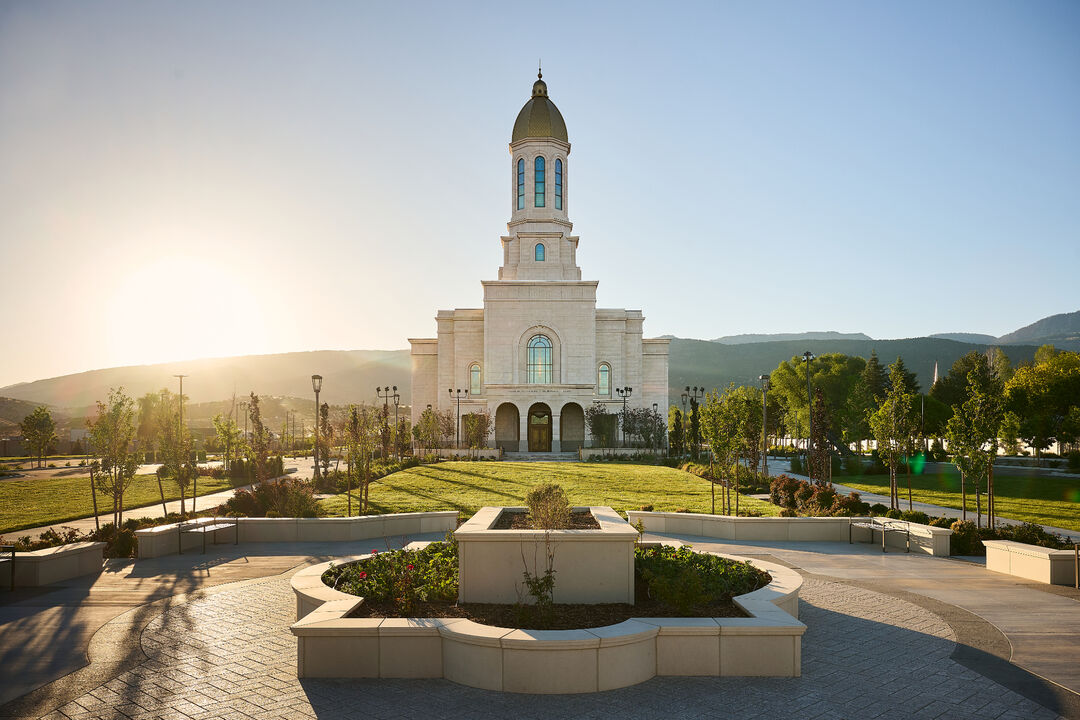
The temple is constructed on a reinforced concrete foundation with a structural steel frame. Rising 156.67 feet from the ground to the top of the spire, it stands as a new landmark in the Sanpete Valley. The property extends over 9.16 acres, enclosed by a precast concrete and aluminum fence.
Interior
A custom broadloom carpet in a gold-beige tone, patterned with floral and wheat motifs, is used throughout the temple. It was designed by Method Studio and produced by Bentley Mills of City of Industry, California. In the sealing rooms and at the center of the celestial room, Half Moon Studios of Midvale, Utah, carved a custom floral pattern with wheat motifs into the white broadloom carpet surrounding the altars. Scandinavian-style area rugs feature flower and wheat motifs in predominant blues, greens and golds; they were designed by Method Studio and Draper Design Studio of Salt Lake City, Utah, and produced by Rugs International of Cartersville, Georgia.
The temple’s primary stones are Botticino Classico and BS Beige in warm tones of beige, cream and gold, accented with Emperador Light, Costa Esmeralda, Sodalite, New Giallo Reale and Afyon stones quarried in Italy, Turkey, Bolivia and Brazil. The green, blue and gold accents echo the temple’s palette of golden wheat tones and Scandinavian blues. The interior stone was fabricated by Campolonghi of Italy and installed by Cleveland Marble of Cleveland, Ohio.
Decorative light fixtures combine crystal, brass, cast metal and faux alabaster elements. Chandeliers by Schonbek feature the company’s exclusive Radiance crystal, prized for its optical purity, while CIANA Lighting’s fixtures are trimmed with AsFour crystal handcrafted in Cairo, Egypt. These fixtures illuminate the temple’s sacred spaces, creating an elegant atmosphere. The temple’s lighting was fabricated by Schonbek of Plattsburgh, New York; CIANA Lighting of Cedar Hills, Utah; and Hudson Valley Lighting of Wappingers Falls, New York.
Quarter-cut sapele, used in both solid wood and veneer form, appears throughout the temple’s interior, with wheat and flower motifs incorporated into the millwork. Crown Custom Millwork of Phoenix, Arizona, fabricated and installed the millwork, including the crown and decorative moldings designed by Method Studio. Barrel-vaulted ceilings in the sealing rooms, celestial room and chapel were installed by Pete King Corp. of American Fork, Utah.
The art glass was designed by Method Studio in collaboration with Holdman Studios of Lehi, Utah, which also fabricated the glass. Found in every exterior window and in select interior doors, the glass features shades of white, orange, yellow, green, blue and pink in patterns that follow the wheat and flower motifs woven throughout the temple’s interior and exterior design.
The temple’s interior and exterior doors are crafted from sapele wood, fabricated and installed by Crown Custom Millwork of Phoenix, Arizona, with additional interior doors provided by Beacon Commercial Door & Lock of Salt Lake City, Utah. The door hardware features a wheat and daisy blossom motif with a stipple-textured finish and fluted handles. It was fabricated by Rocky Mountain Hardware and installed by Beacon Commercial Door & Lock.
The baptismal font railings and surround combine etched and tempered glass, bronze railings and a stained wood cap, with the temple’s floral and wheat motifs repeated in the glass and balusters. They were fabricated and installed by Sheet Metal Specialties of West Valley City, Utah.
Decorative paint along the temple’s ceilings displays motifs of wheat and Scandinavian flowers. The decorative painting was done by David Horne of Cottonwood Heights, Utah, and the general painting was completed by John Petersen Painting of Orem, Utah.
The temple’s original artwork celebrates the landscapes and heritage of the Sanpete Valley. “Peace and Plenty” by Brad Aldridge and “A Fair View” by Michael Workman — both artists who live and work in the valley — capture its pastoral beauty, while “Buttermilk Falls” by Linda Curley Christensen depicts a waterfall the artist discovered in nearby Manti Canyon. “Adam and Eve” by Walter Rane completes the temple’s collection.
- "President Nelson Announces a New Temple Will Be Built in Ephraim, Utah," The Church of Jesus Christ of Latter-day Saints News Release, 1 May. 2021.
- "Site Location Announced for a New Utah Temple," The Church of Jesus Christ of Latter-day Saints News Release, 22 Oct. 2021.
- "President Nelson Presides at Ephraim Utah Temple Groundbreaking," The Church of Jesus Christ of Latter-day Saints News Release, 27 Aug. 2022.
- "News for the Ephraim Utah and Springfield Missouri Temples," The Church of Jesus Christ of Latter-day Saints News Release, 20 Apr. 2026.